Why Flat Lays Fail: Scaling Ad ROAS with AI On-Model Imagery
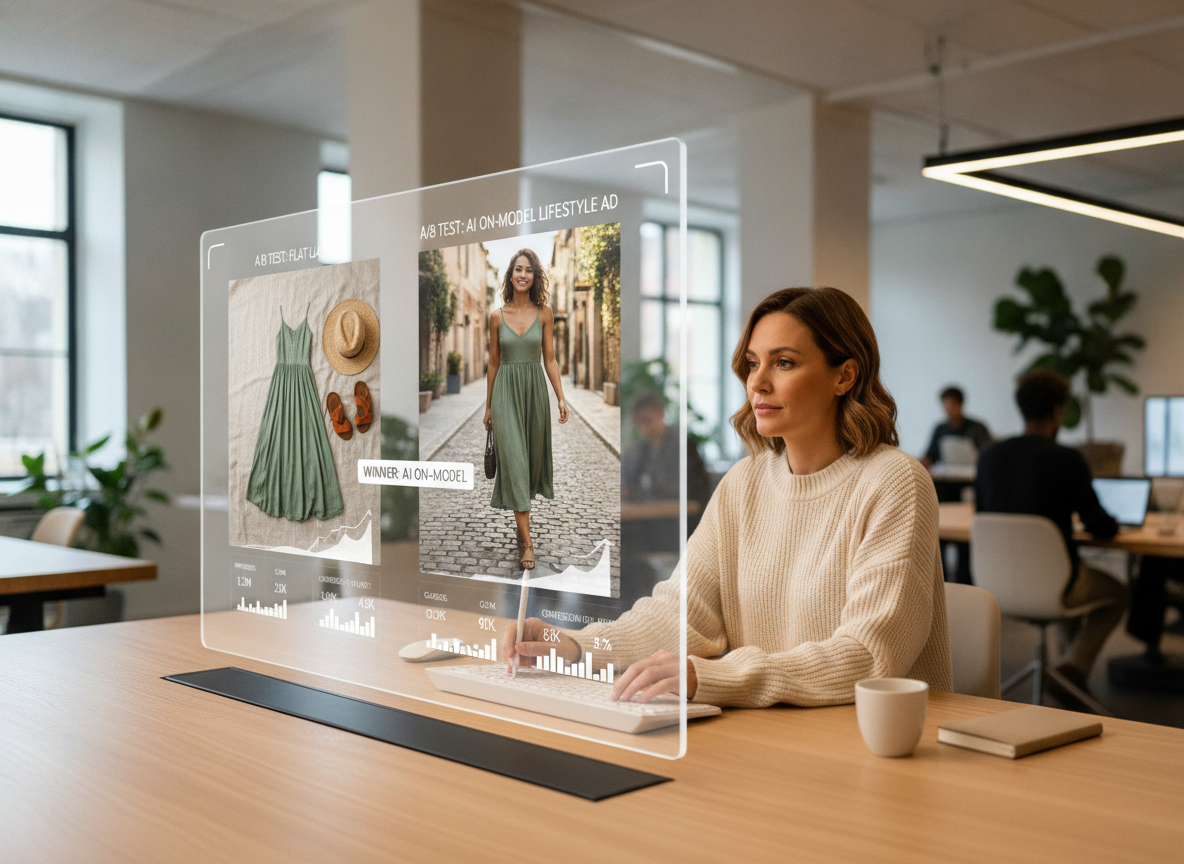
Brands need diverse on-model presentation for paid social, but physical shoots bottleneck creative testing. This playbook explains how performance teams use AI on-model imagery to generate high-ROAS creative at scale.
- Why relying on slow traditional photoshoots leads to ad fatigue
- How the AI workflow turns one product shot into limitless ad creatives
- What details AI must preserve versus what can be tested dynamically
- Scaling ad testing velocity with Performance Loop
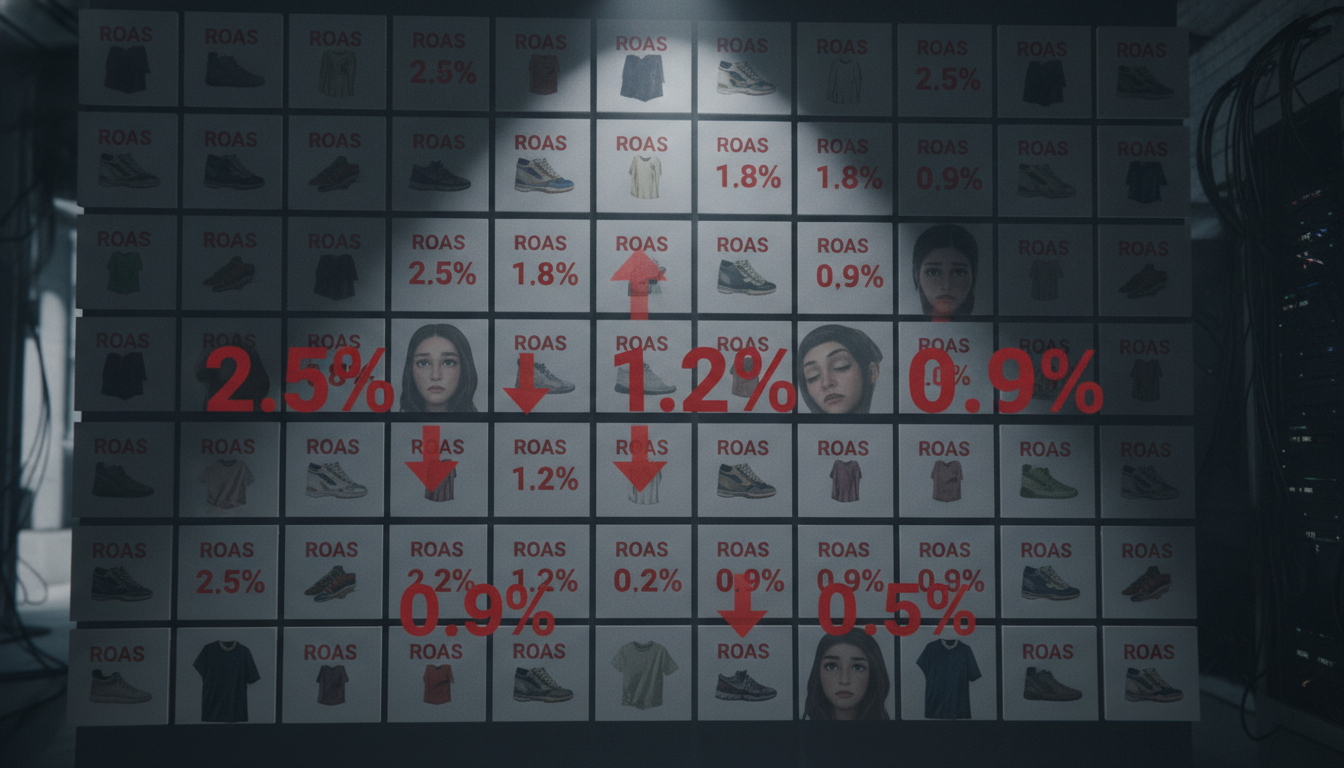
Are your Meta campaigns starving for fresh creative because your next photoshoot is weeks away? In fashion ecommerce, relying solely on flat lay images is a proven way to burn budget. Shoppers scroll past products lacking human context. While a fashion ecommerce conversion rate averages just 2.2% (WISEPIM, 2026), injecting dynamic, relatable on-model imagery into your funnel is a known driver of ROAS. The challenge is acquiring those images without the crippling delays of traditional production.
Why is the operational friction of traditional ad production failing?
Building an ad testing matrix requires volume. But the traditional workflow—model selection, casting, studio booking, styling, photography, and scheduling—is entirely opposed to speed. If you need fifty creative variations to test on TikTok this week, a physical shoot cannot deliver. Furthermore, when fashion returns cost an average of $30 to $40 per order fully loaded (Eightx, 2026), running ads that misrepresent fit or context not only hurts CAC but also destroys back-end profitability.
How does the AI workflow move from ghost mannequin to paid social?
To beat creative fatigue, growth teams are adopting a new sequence: Product image → garment understanding → model selection → on-model generation → quality review → lifestyle/ad deployment. Imagine marketing a "green linen wrap midi dress." Instead of shooting it on one model in one location, you input the flat lay into the AI. Within hours, you generate ad variations featuring the dress on a model in a cafe in Paris for European targeting, and on a beach for summer prospecting. The AI workflow delivers the volume required for algorithmic success.
Garment fidelity versus dynamic testing
There is a massive difference between generating a generic AI fashion model and accurately placing a real SKU into a scene. If the ad promises a specific dress and the customer receives something different, your return rate will spike. The AI must lock the product's truth while varying the marketing hooks.
| Strictly Preserved (Garment Truth) | Dynamically Tested (Marketing Hooks) |
|---|---|
| Garment identity, exact color, and print | Model demographics and posing |
| Cut, silhouette, and construction | Styling, layers, and accessories |
| Logos and visible details | Backgrounds and lifestyle locations |
| Believable fit and drape | Campaign context and lighting mood |
A QA framework for AI-generated ads
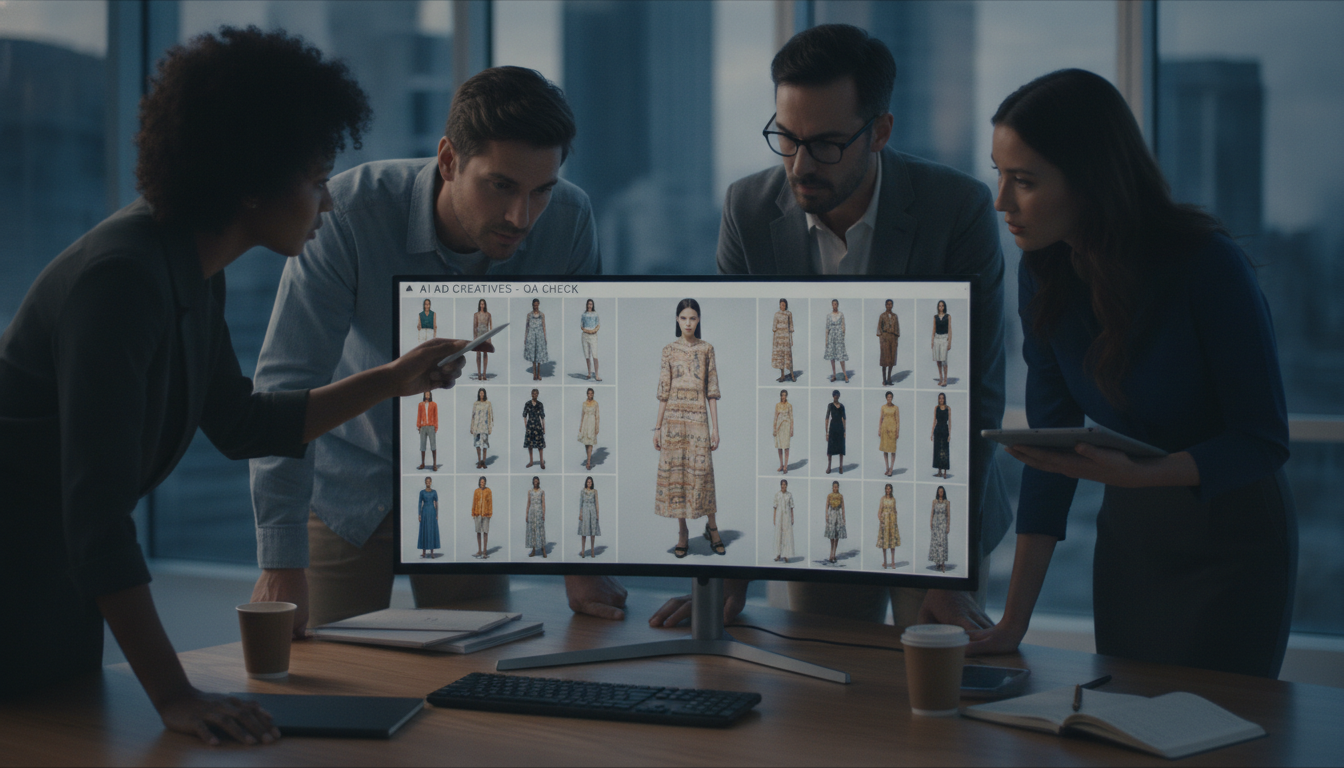
Before allocating budget, every AI-generated creative must pass a rigorous QA check. Garment fidelity is non-negotiable. Beyond the product, check the human elements: are hands and limbs anatomically correct? Ensure lighting and shadows are consistent between the model and the background realism. A batch of ads must maintain consistent quality to avoid triggering ad platform rejections or breaking shopper trust.
Steps to test AI creative before scaling budget
- Isolate a small SKU cohort of evergreen bestsellers currently struggling with ad fatigue.
- Use the AI workflow to generate 5-10 lifestyle variations per SKU.
- Execute a human review based on the QA criteria (fit, lighting, limbs, seams).
- Launch a low-budget A/B test comparing the AI on-model ads against existing flat lays.
- Analyze the CTR and CAC delta before rolling the winning AI assets into broad targeting.
When to automate creative velocity with Performance Loop
Generating the assets is only half the battle; mapping them to performance is where margins are made. Performance Loop specializes in AI ad performance and creative for fashion eCommerce. It ensures that the on-model imagery you generate becomes high-converting paid-social creative. By tracking which creative attributes—such as the model, scene, and hook—drive the lowest CAC, Performance Loop continuously optimizes your spend without you ever booking a studio.
Fueling the entire pipeline
The benefits of this workflow extend beyond the ad account. Technologies like FlixStock use AI on-model imagery and Meta Models for producing model-based fashion content from product inputs. This means the high-performing lifestyle ad creative driving traffic can perfectly match the on-model imagery the shopper sees upon landing on the PDP, creating a seamless, high-conversion visual journey.
Frequently asked questions
Why are flat lay ads less effective on Meta and TikTok?
Flat lays lack human and lifestyle context. Social media platforms are feed-based and highly visual; faces and human poses naturally stop the scroll better than static garments. On-model imagery provides the context needed to drive higher Click-Through Rates (CTR).
Does AI ad creative maintain accurate garment representation?
Yes. When using specialized ecommerce AI engines, the source garment's pixels—including exact color, pattern, and details—are strictly preserved. It is not generating a "new" dress; it is placing your exact dress onto a digital model.
How does AI help combat ad creative fatigue?
AI eliminates the time and cost bottlenecks of traditional photoshoots. Performance marketers can generate hundreds of new ad variations—changing backgrounds, models, and styling—in hours, constantly feeding fresh creative to the ad algorithms.
Can AI-generated ads reduce ecommerce return rates?
Absolutely. By providing clear, on-model visual context regarding fit and drape in the initial ad touchpoint, you set accurate shopper expectations. This helps filter out bad-fit buyers and reduces costly returns post-purchase.
What should I look for when QAing an AI-generated fashion ad?
Always verify garment fidelity first (color, cut, details). Next, scrutinize human anatomy, particularly hands and limbs, for anomalies. Finally, ensure the lighting and shadows between the model and the background appear natural and cohesive.
References
- WISEPIM — Fashion & Apparel E-commerce Statistics & Benchmarks (2026)
- Eightx — Real cost of returns calculator: what each refund actually costs (2026)
- ScienceDirect — The billion-pound question in fashion E-commerce: Investigating the anatomy of returns (2024)
- Color Experts International — Clothing Photography for eCommerce: Ideas, Tips, Style (2026)
- NRF — Consumer Returns in the Retail Industry (2025)