
Why Static Images Fail on Reels: Scaling Video Ads with AI
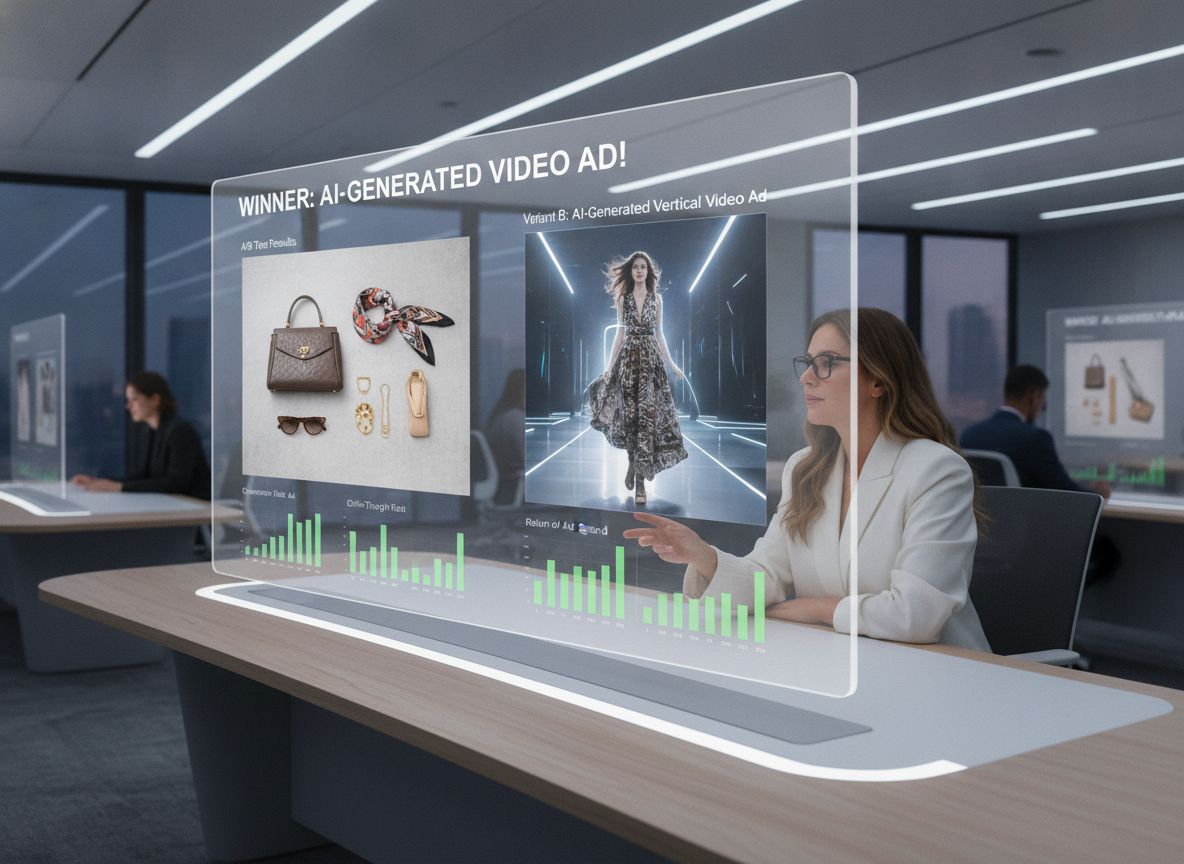
Social algorithms reward motion, but shooting video for every product is too expensive. This guide explains how performance teams use AI to convert static product images into dynamic, high-ROAS video ads for Meta and Reels.
- Why static images are losing ground in video-first placements
- How Meta's catalog video capabilities drive conversion efficiency
- Repurposing one product video into multiple paid social creatives
- Measuring and scaling video ad performance with Performance Loop
Does the fabric fall naturally? How does the garment move? Is the fit structured or relaxed? When a shopper scrolls through Instagram Reels or TikTok, a static product image fails to answer these fundamental questions. In video-first environments, static imagery feels disruptive and low-effort, leading to plummeting click-through rates. Yet, filming every single SKU to feed the ad account requires an unsustainable production budget. For fashion performance marketers, the bottleneck isn't the ad platform—it is acquiring commercially accurate video assets at scale.
AI video vs. traditional fashion product shoot
To feed Advantage+ campaigns, you need volume. A traditional fashion video shoot delivers a handful of highly polished assets after weeks of planning. AI video generation reverses this model. The workflow moves efficiently: Product image → on-model image → movement sequence → PDP video → social/ad video. Starting from a basic flat lay or ghost mannequin image, AI can render the garment onto a digital model, simulate walking or turning, and output a dynamic 9:16 asset. This allows teams to generate hundreds of video creatives in the time it takes to storyboard a single physical shoot.
The advantage of Meta's catalog video integration
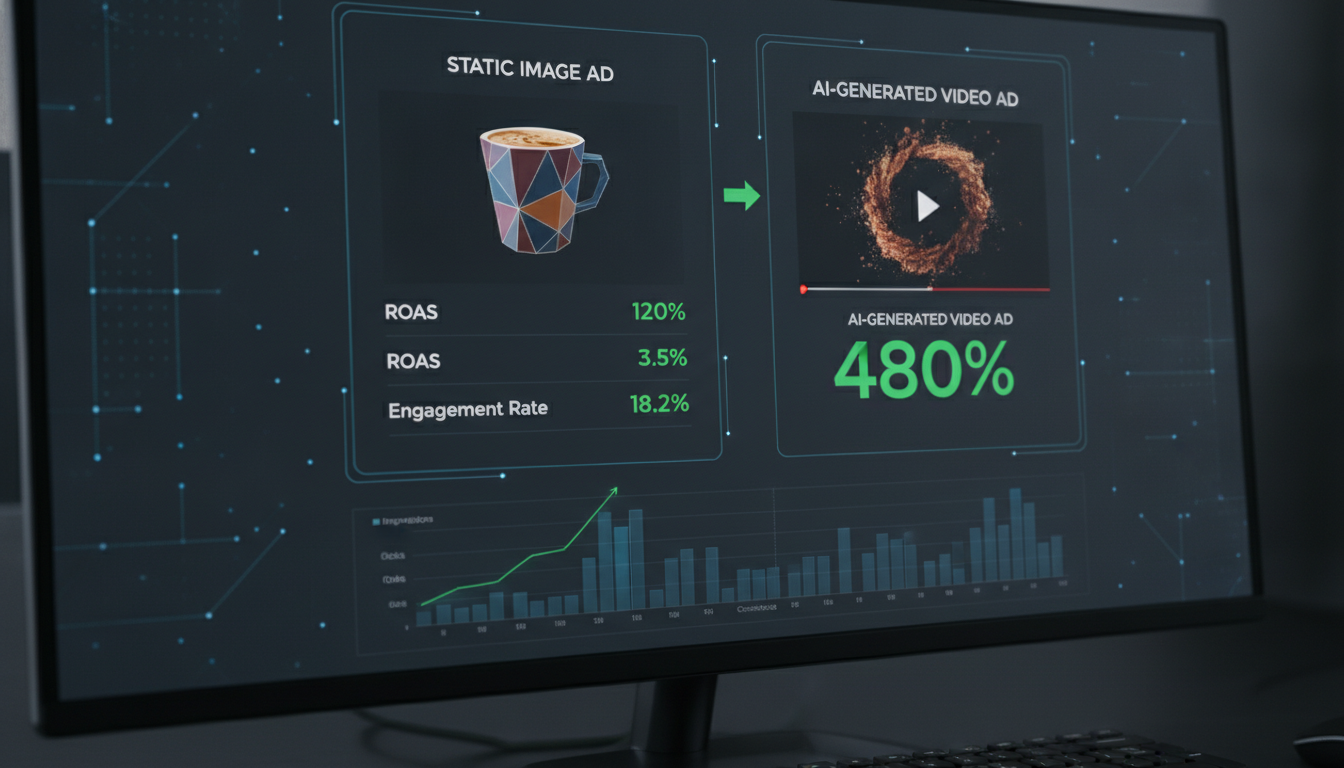
The push toward video is not just a creative preference; it is structural. Meta has explicitly integrated catalog product video generation and Reels-oriented layouts into its ecosystem. According to Meta for Business (2024), advertisers who integrated video assets into their catalogs saw significant improvements. In one documented case study, a brand testing catalog product video experienced a 41% increase in return on ad spend (ROAS) and a 45% decrease in cost per purchase compared to static-only delivery. The algorithm favors motion because shoppers favor motion.
How to preserve garment accuracy in motion
For an ad to be profitable, it cannot deceive the buyer. Generative AI is prone to hallucinations, but a commercially useful fashion ad must be grounded in reality. When animating a static image, the garment must not change shape unexpectedly, gain or lose details, change color, or reveal unsupported construction. If the video shows a flowing silk skirt, but the product is stiff cotton, the resulting return rate will destroy the campaign's margin. The AI must lock the garment's identity while generating natural folds, shadows, and movement.
| Placement | Format Focus | Creative Treatment |
|---|---|---|
| Product Detail Page (PDP) | 16:9 or 4:5, clean background | Focus entirely on fit, drape, and 360-degree silhouette. |
| Instagram Reels / TikTok | 9:16 vertical, fast pacing | Add trending audio, text hooks, and fast-paced editing. |
| Advantage+ Catalog Ads | Dynamic cropping | Clean loops demonstrating the product in motion. |
| Retargeting Campaigns | 1:1 or 4:5 | Close-ups on fabric detail and movement to overcome hesitation. |
Steps to repurpose one product video into paid social creatives

- Generate a clean, 5-second AI video loop showing the garment's fit and drape.
- Format the baseline asset into 9:16 vertical dimensions.
- Create three distinct openings (e.g., a fast zoom, a text overlay posing a question, a split-screen).
- Test the variations in a broad Meta campaign to identify which hook retains attention.
- Scale the winning video format across similar product categories.
Where Performance Loop drives creative strategy
Generating the video is the first step; measuring its financial impact is the second. While platforms like FlixStock handle the scalable fashion visual generation to create the core video assets, Performance Loop converts those product videos into performance creatives. It measures their results directly inside paid campaigns. This allows growth teams to identify precisely which video formats, hooks, and movement types deserve more budget, replacing guesswork with data-driven creative scaling.
Frequently asked questions
Why do static images underperform on Reels and TikTok?
These platforms are inherently designed for motion and rapid consumption. A static image interrupts the user experience, looking like an obvious advertisement, which leads to lower engagement rates and higher acquisition costs.
Can AI video be used in Advantage+ catalog campaigns?
Yes. Meta now allows advertisers to upload video assets directly into their product catalogs. The Advantage+ algorithm can then dynamically serve these videos to users who are more likely to engage with motion content.
Does AI video guarantee higher ROAS for fashion brands?
No tactic guarantees ROAS universally. While Meta reports strong efficiency gains in their tests, brands must rigorously A/B test AI video against their best-performing static assets to validate the financial impact on their specific audience.
Will AI-generated videos cause higher return rates?
Not if generated correctly. Commercial AI engines lock the garment's real details (color, cut, pattern). As long as the AI does not hallucinate impossible fabric behavior, the video actually sets better expectations and can reduce fit-related returns.
How quickly can AI generate video ads compared to a physical shoot?
A physical shoot takes weeks of logistical planning and post-production. AI workflows can take a static flat lay and generate animatable, ready-to-deploy video assets in a matter of hours, massively increasing creative testing velocity.
References
- Meta for Business — Catalog product video: a new solution to maximize automation performance (2024)
- WISEPIM — Fashion & Apparel E-commerce Statistics & Benchmarks (2026)
- Eightx — Real cost of returns calculator: what each refund actually costs (2026)
- Ecommerce Times — Meta's New Video-First Shopping Ads (2026)
- Color Experts International — Clothing Photography for eCommerce: Ideas, Tips, Style (2026)