
Beat Creative Fatigue on Meta Ads Before It Kills Your ROAS
Creative fatigue is one of the most common reasons CPA quietly climbs in Meta Ads Manager. Week one looks fine. By week four, the same static image that converted at $15 per purchase is costing $38. Nothing changed in your targeting or bid strategy. The audience simply got tired of seeing the same creative.
The fix is not pausing and relaunching every ad set. It is building a rotation system: Dynamic Creative Optimization inside Meta, frequency caps to limit overexposure, and AI tools that generate fresh hooks before performance drops. Brands that treat creative as a weekly pipeline, not a one-time asset, keep CPA stable while competitors watch costs double.
Teams using AI ad performance and creative for fashion eCommerce consolidate creative testing, budget pacing, and cross-channel reporting so Meta campaigns improve without manual spreadsheet work.
Signs your Meta ad creative is fatiguing
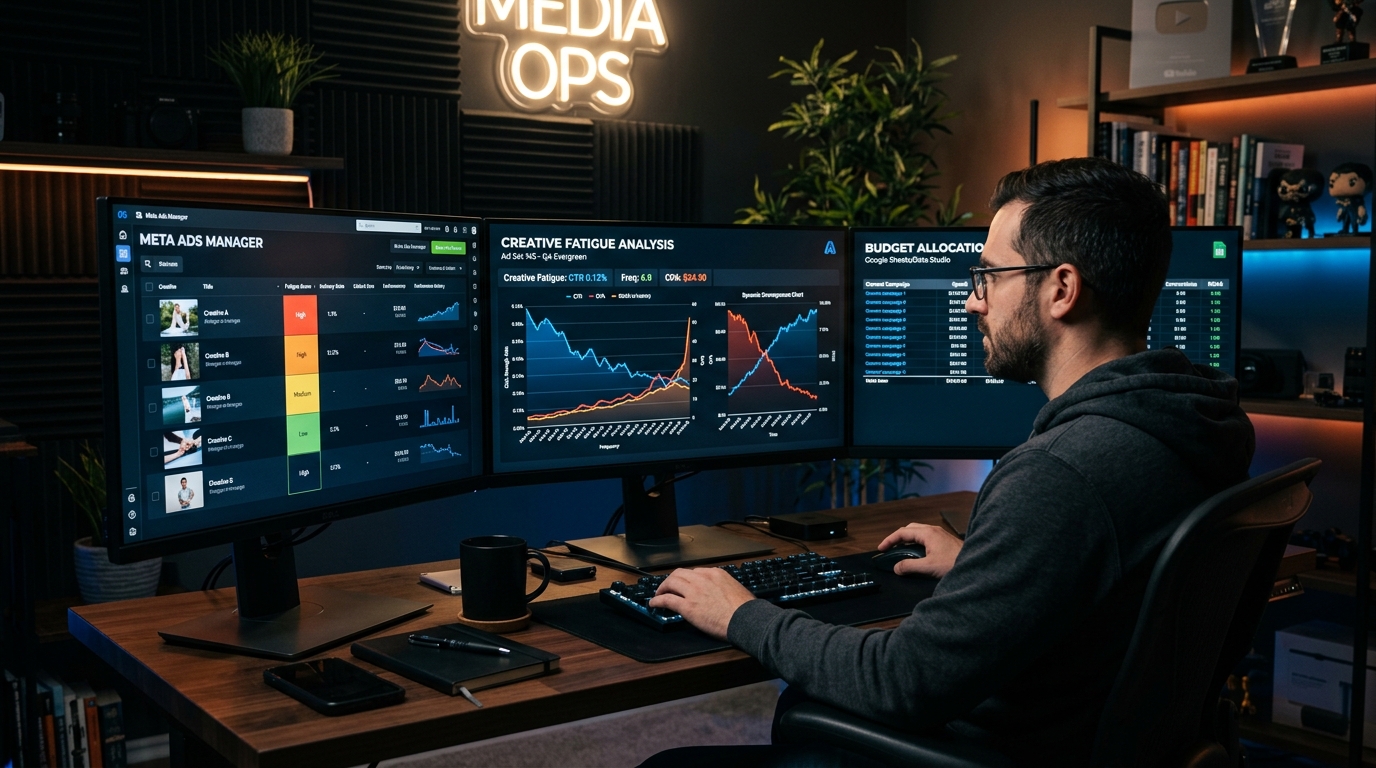
Creative fatigue is audience saturation. When the same person sees your ad three, four, or five times in a week, they stop clicking. Meta's algorithm interprets the lower engagement as a quality signal and charges you more per impression. CPM goes up. CTR goes down. CPA follows. You can see it clearly in Ads Manager. Pull up an individual ad and compare week-over-week metrics. If frequency is climbing above 2.5 and CTR is falling at the same time, fatigue is the likely cause. This happens faster on smaller audiences and with static image ads that have no visual variation to offer.
Using Dynamic Creative Optimization to fight ad fatigue
Dynamic Creative Optimization, or DCO, lets you upload multiple creative elements and let Meta assemble combinations automatically. Feed the system five videos, three primary text options, and two headlines. That creates 30 possible ad permutations. Meta allocates budget to whichever combinations perform best and naturally cycles through variants as some begin to fatigue. DCO works best when your elements are genuinely different, not minor copy tweaks on the same visual. Test a UGC talking-head hook against a product close-up hook. Use the same body and CTA. The algorithm finds winners faster because it is comparing meaningfully different experiences, not shuffling synonyms.
"Advertisers who refresh creative at least every two weeks maintain 20 to 35% lower CPA than brands running the same assets for a month or longer. Fatigue is predictable. Rotation is the countermeasure."
- Nielsen, Impact of Ad Frequency on Brand Recall and CPA (2025)
- Static Creative ($)
- AI Rotated Creative ($)
Setting up AI-driven creative rotation
AI rotation tools earn their place when you need volume. If your account burns through three to five new creatives a week, manual production cannot keep up. AI generators can produce hook variants, background swaps, and text overlays from a single source video in minutes. Pipe those outputs into a DCO ad set and let Meta test them.
The workflow looks like this. Identify a winning ad body that holds attention past 15 seconds. Use AI to generate five new opening hooks. Launch them in a DCO campaign with your existing body and CTA. Kill hooks below your hook-rate threshold after 1,000 impressions. Promote winners to standalone ads and scale budget within 48 hours.
Frequency caps that stop CPA from climbing
Frequency caps limit how often one person sees your ad. In prospecting, set a cap of 2 impressions per 7 days. This forces Meta to find new users instead of hammering the same small pool. In retargeting, you can allow 3 to 4 impressions per week because warm audiences tolerate more repetition.
Caps alone are not enough. If you cap frequency but never introduce new creative, you simply reach fewer people at the same declining efficiency. Pair caps with rotation. The chart above shows the difference clearly: static creative CPA climbs from $15 to $55 over five weeks, while AI-rotated creative holds near $15 throughout.

Weekly creative refresh checklist
Every Monday, review ad-level performance for the past seven days. Flag any ad where frequency exceeded 2.5 and CTR dropped more than 15% week over week. Pause underperformers. Duplicate winners into a DCO ad set with two to three new hook variants. Set frequency caps before scaling budget. Check Events Manager to confirm purchase events are still firing cleanly. Brands spending $5,000 or more per month should aim for three to five new creative variants every week. Even 15-second clips count. The goal is optionality for the algorithm, not perfection on every asset.
Wrapping up
Creative fatigue is a math problem, not a mystery. Static ads decay. CPA rises. The brands that win treat Meta ads as a content system with built-in rotation: DCO for permutation testing, AI tools for hook volume, and frequency caps to prevent overexposure. Build that pipeline and your cost per acquisition stays flat while you scale.
Frequently asked questions
How long before combating ad fatigue campaigns stabilize on Meta?
Most fashion accounts need 50+ weekly purchase events before Meta exits the learning phase. Plan two to three weeks of stable spend before judging ROAS.
What budget should a fashion brand start with for Meta ads?
Start with enough daily budget to generate 7–10 purchases per ad set per week. For many apparel brands that means $100–$300 per day on prospecting.
When should you refresh creative for fashion Meta ads?
Refresh hooks or swap in new video variants when frequency exceeds 2.5 or CPA rises 20% week over week. Weekly creative tests are standard for scaling brands.