Google Ads in Digital Marketing: Where Fashion Brands Win (and Lose)
In the highly competitive world of modern retail, the role of google ads in digital marketing cannot be overstated. A staggering number of consumers begin their purchasing journey on search engines, making it absolutely crucial for brands to capture high-intent traffic the moment a query is entered. Unlike outbound marketing tactics that interrupt the user experience, search engine advertising positions your brand exactly where potential customers are already looking for solutions, products, and services. This inbound approach ensures that every dollar spent is directed toward individuals actively expressing interest, thereby maximizing return on investment.
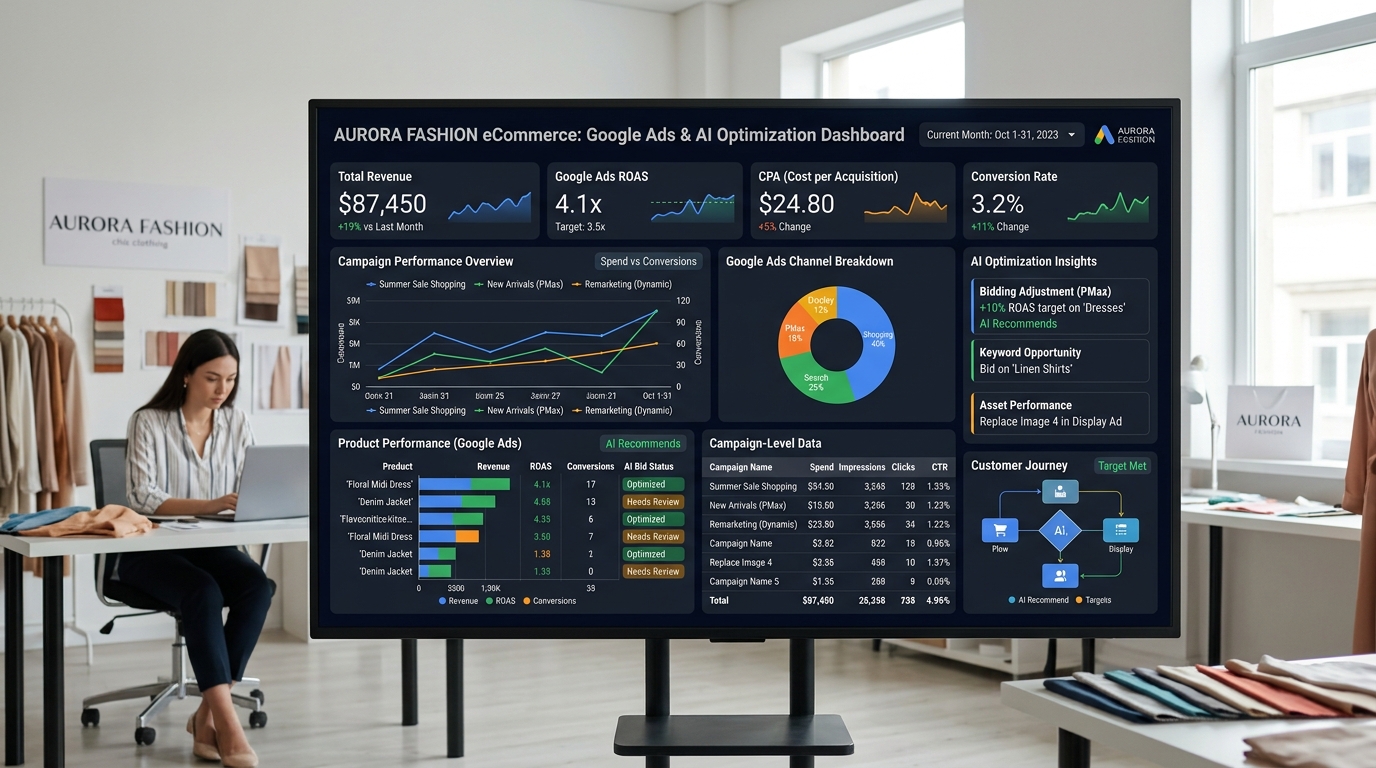
The landscape of online advertising has fundamentally shifted over the past decade. Previously, advertisers relied heavily on manual bidding, extensive keyword lists, and intuition-based targeting. Today, machine learning and sophisticated algorithms dominate the ecosystem. Platforms have evolved to prioritize intent over exact match strings, meaning that advertisers must adopt a more holistic and data-driven approach. Harnessing the power of AI ad performance and creative for fashion eCommerce has become a non-negotiable requirement for brands seeking sustainable growth and profitability in a crowded marketplace.
This comprehensive guide explores the multifaceted universe of search advertising, detailing the precise strategies, structures, and optimizations necessary to dominate the search results page. From foundational account architecture to advanced automation and retargeting, we will cover every critical element required to transform a stagnant account into a robust engine for revenue generation and customer acquisition. Whether you are launching your very first campaign or looking to refine an existing strategy, understanding these mechanics is paramount to long-term success.
How to Structure Campaigns for Google Ads in Digital Marketing
The foundation of any successful advertising initiative lies in its account architecture. Properly structuring your campaigns ensures that budgets are allocated efficiently, quality scores are maintained, and performance data is easily interpretable. Without a logical and organized structure, even the most compelling creative and generous budgets will fail to yield optimal results. The goal is to create a hierarchy that reflects your business offerings while providing the granularity needed for precise control and optimization. Begin by dividing your campaigns into distinct categories based on product lines, services, or overarching themes. For instance, a clothing retailer should separate their upper-funnel generic searches from their lower-funnel brand searches. This segmentation allows you to allocate larger portions of your budget to high-converting branded terms while carefully managing the spend on broader, more competitive keywords. Furthermore, segmenting by geography or language can be beneficial for international brands looking to tailor their messaging to specific regional audiences. Within each campaign, ad groups should be tightly themed around a small cluster of highly relevant keywords. Gone are the days of stuffing hundreds of disparate keywords into a single ad group. Modern best practices dictate that ad groups should contain no more than 15-20 closely related keywords. This tight thematic grouping ensures that the ads served are hyper-relevant to the user's search query, which in turn improves click-through rates, lowers cost-per-click, and elevates overall quality scores. It is also essential to implement a robust negative keyword strategy from the very beginning. Negative keywords prevent your ads from showing on irrelevant or low-intent searches, thereby protecting your budget from being wasted on unqualified clicks. Regularly reviewing search term reports and proactively adding negative keywords is a critical maintenance task that directly impacts the efficiency and profitability of your campaigns.
Step-by-step Guide to Google Ads Lead Generation
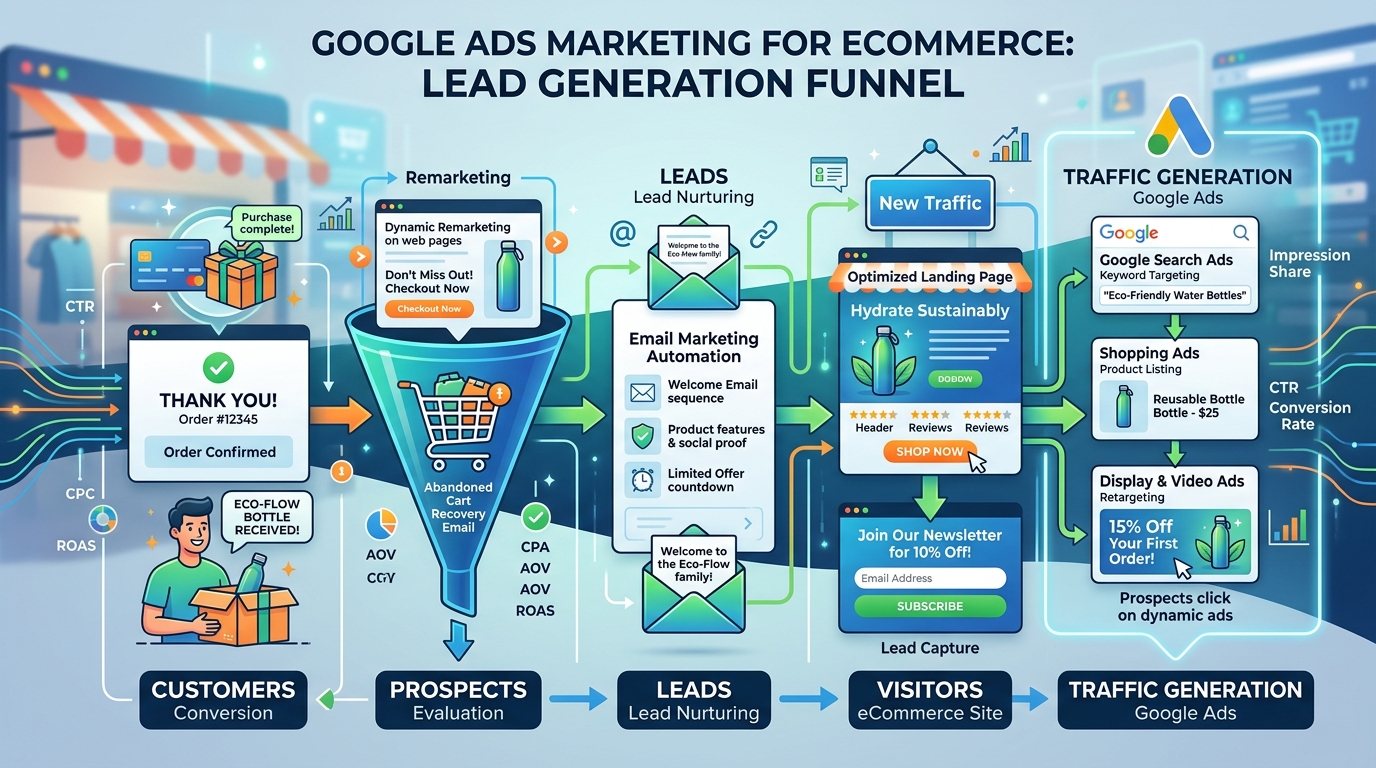
For many businesses, particularly those in the B2B sector or high-ticket retail, the primary objective is capturing qualified prospects. Effectively executing google ads lead generation requires a nuanced approach that goes beyond simply driving traffic. The focus must shift toward converting that traffic into actionable inquiries, newsletter sign-ups, or consultation requests. This process demands a seamless alignment between ad copy, targeting, and the post-click experience. The first step in this process is identifying the specific pain points and desires of your target audience. Your ad copy must speak directly to these needs, offering a clear and compelling value proposition. Use strong, action-oriented language and highlight the unique benefits of your offering. Ad extensions, such as sitelinks, callouts, and structured snippets, should be utilized to provide additional context and increase the overall real estate your ad occupies on the search results page. Once a user clicks on your ad, they must be directed to a dedicated landing page designed specifically for conversion. Sending paid traffic to a generic homepage is a common and costly mistake. A high-converting landing page should have a singular focus, minimizing distractions and guiding the user toward a clear call-to-action (CTA). The messaging on the landing page must seamlessly match the promise made in the ad copy, creating a cohesive and trustworthy user journey. Furthermore, lead capture forms should be optimized for minimal friction. Ask only for the information that is absolutely necessary to qualify the lead. Lengthy or overly complex forms will inevitably lead to higher abandonment rates. Consider implementing progressive profiling or multi-step forms to make the process feel less daunting. Finally, ensure that you have robust tracking in place to measure the exact cost-per-lead and attribute conversions back to the specific keywords and campaigns that generated them.
- Identify target audience pain points and create tailored ad copy.
- Set up conversion-optimized landing pages with clear CTAs.
- Implement robust tracking and server-side tagging.
- Optimize lead capture forms to minimize friction.
Campaign Optimization and Google Ads Marketing Tactics
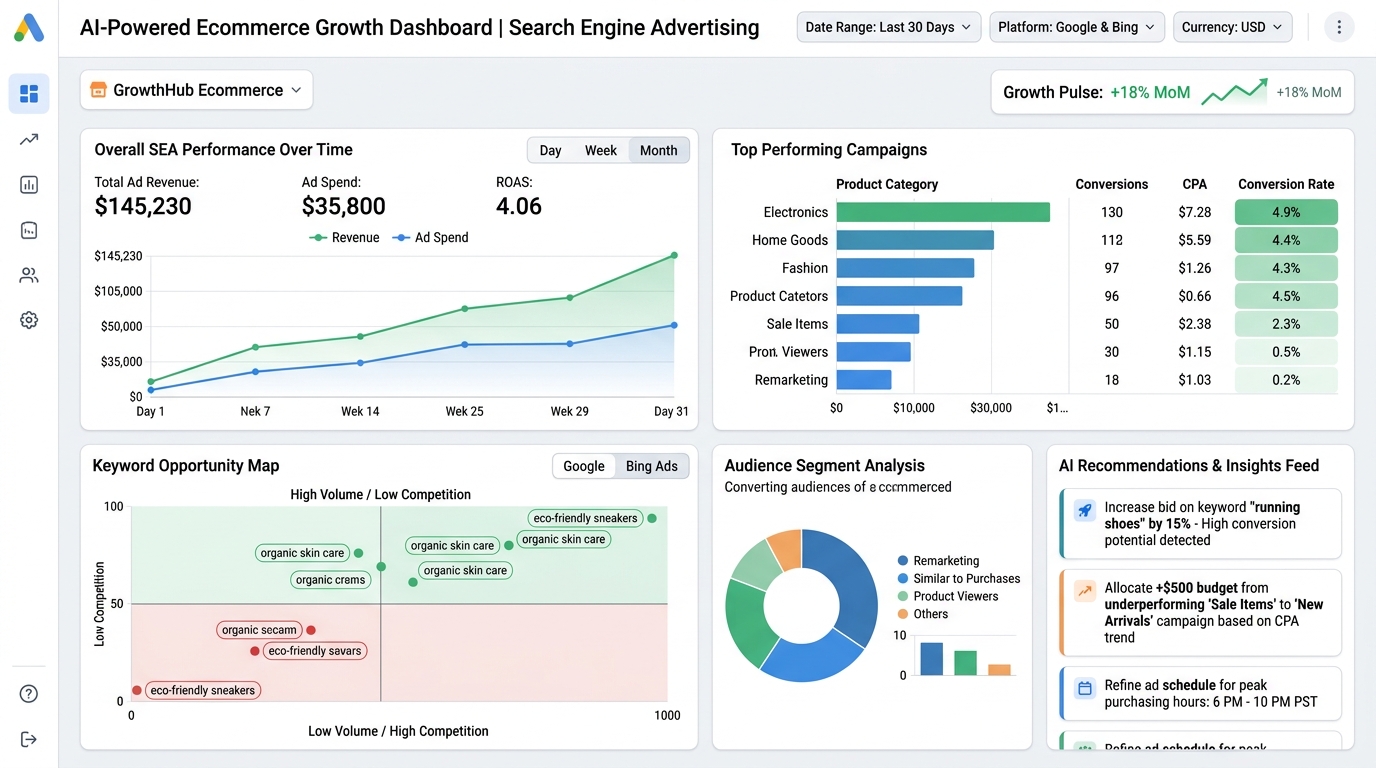
Launching a campaign is merely the beginning of the journey. Continuous optimization is the engine that drives sustained performance and scale in any robust google ads marketing strategy. The digital landscape is dynamic, with competitor behavior, consumer trends, and platform algorithms constantly evolving. To maintain a competitive edge, advertisers must engage in rigorous testing, data analysis, and iterative refinement of their campaigns. A core component of optimization is bid management. While manual bidding allows for granular control, the sheer volume of signals evaluated by modern search engines makes automated bidding strategies increasingly necessary. Strategies such as Target CPA (Cost Per Acquisition) or Target ROAS (Return on Ad Spend) leverage machine learning to adjust bids in real-time based on the likelihood of a conversion. However, these automated systems require sufficient historical data to function effectively, meaning that patience and a carefully planned transition from manual to automated bidding are crucial. Ad copy testing is another vital optimization tactic. Advertisers should constantly run A/B tests to identify which headlines, descriptions, and CTAs resonate most strongly with their audience. The introduction of Responsive Search Ads (RSAs) has automated much of this process, allowing the platform to dynamically assemble the best-performing combinations of assets. To maximize the effectiveness of RSAs, ensure that you provide a diverse array of high-quality headlines and descriptions that can function independently or together. Quality Score optimization remains a foundational element of campaign management. This metric, which evaluates the expected click-through rate, ad relevance, and landing page experience, directly impacts your cost-per-click and ad rank. Improving Quality Score involves aligning keywords tightly with ad copy, ensuring landing pages load quickly and provide relevant content, and continuously refining the user experience. A high Quality Score acts as a multiplier, allowing you to achieve better ad positions at a lower cost.
Scaling Google Ads for Ecommerce Growth
When transitioning from a successful baseline to aggressive expansion, leveraging google ads for ecommerce demands a strategic shift. Scaling is not simply a matter of increasing budgets; it requires a systematic approach to identifying new opportunities, expanding reach, and maintaining profitability at higher volumes. The challenge lies in driving incremental revenue without experiencing a disproportionate increase in acquisition costs. One of the most effective ways to scale an ecommerce account is through the strategic utilization of Performance Max (PMax) campaigns. PMax campaigns consolidate various advertising channels-including Search, Display, YouTube, Discover, and Maps-into a single, goal-based campaign type. By providing high-quality creative assets, specific audience signals, and robust product feeds, advertisers empower the algorithm to find converting customers across the entire network. This holistic approach often uncovers profitable pockets of inventory that would be difficult to identify through manual targeting. Expanding keyword coverage is another critical scaling tactic. This involves researching and targeting long-tail keywords, adjacent product categories, and upper-funnel informational queries. While upper-funnel traffic may not convert immediately, it plays a vital role in building brand awareness and filling the top of the sales funnel. Utilizing Dynamic Search Ads (DSAs) can also help uncover new search queries by automatically generating ads based on the content of your website, capturing traffic that may have been missed by manual keyword builds. Finally, international expansion offers a significant avenue for scale. By translating ad copy, localizing landing pages, and adapting to regional search behaviors, ecommerce brands can tap into entirely new markets. However, international scaling requires careful consideration of shipping logistics, currency conversion, and cultural nuances. It is advisable to test new markets incrementally, starting with those that share similar linguistic or cultural characteristics before expanding further globally.
Choosing the Right Google Ads Company or AI Platform
As campaigns become increasingly complex, many brands face the decision of whether to manage their advertising in-house or partner with an external agency. Selecting the right google ads company or adopting a specialized AI platform can be the difference between stagnation and explosive growth. The ideal partner should possess deep industry expertise, a proven track record of success, and a transparent approach to reporting and communication.
When evaluating potential partners, look beyond superficial metrics and focus on their strategic methodology. Do they understand the nuances of your specific industry? Are they proficient in advanced tactics such as offline conversion tracking, server-side tagging, and customized attribution modeling? A competent agency will act as a strategic extension of your team, providing actionable insights and proactive recommendations rather than simply executing basic account maintenance.
Alternatively, the rise of sophisticated AI management platforms has provided brands with powerful tools to automate and optimize their campaigns internally. These platforms often leverage proprietary algorithms and cross-channel data to make bid adjustments, allocate budgets, and identify optimization opportunities at a scale and speed that human operators cannot match. For brands with the internal resources to oversee the strategic direction, an AI platform can significantly enhance efficiency and performance.
Ultimately, the decision between an agency, an AI platform, or a hybrid approach depends on your organization's specific needs, budget, and internal capabilities. Regardless of the path chosen, it is essential to maintain clear communication, establish realistic performance goals, and regularly review the impact of the partnership on your overall business objectives. A successful collaboration is built on trust, transparency, and a shared commitment to driving measurable results.
Conclusion: The Future of Search Advertising
The trajectory of digital advertising is unmistakably shifting towards increased automation, deeply integrated machine learning models, and privacy-centric measurement solutions. As third-party cookies depreciate and regulatory landscapes evolve, advertisers must adapt their strategies to focus heavily on first-party data collection and server-side tracking methodologies. The ability to feed high-quality, accurately attributed conversion signals back into the advertising algorithms will become the primary competitive differentiator in the coming years. Brands that fail to modernize their tracking infrastructure will find their automated bidding strategies increasingly starved of the critical data required to function efficiently. Furthermore, the creative element of search advertising is undergoing a renaissance. With the widespread adoption of Responsive Search Ads and the integration of visual assets directly into the search results page, the textual rigidity of the past is fading. Advertisers must now think holistically about the search experience, incorporating compelling imagery, diverse ad extensions, and highly relevant landing page experiences that align seamlessly with the user's intent. The successful campaigns of the future will blend the analytical rigor of data science with the creative empathy required to forge genuine connections with consumers. In summary, mastering this ecosystem requires a commitment to continuous learning and agile execution. The strategies outlined in this guide provide a robust foundation for building, scaling, and optimizing highly profitable campaigns. By embracing automation, prioritizing structural integrity, and relentlessly focusing on the user experience, brands can navigate the complexities of modern digital marketing and unlock unprecedented avenues for sustained growth and market dominance.
Frequently asked questions
How long does it take to see results from search advertising?
While traffic begins flowing immediately upon launch, it typically takes 4 to 12 weeks for an account to gather sufficient data and exit the learning phase. During this period, the algorithms are calibrating to identify the most cost-effective conversion pathways. Patience and consistent optimization are crucial during this initial ramp-up phase.
What is a good Return on Ad Spend (ROAS) for ecommerce?
A 'good' ROAS varies wildly depending on profit margins, industry averages, and business models. Generally, ecommerce brands aim for a ROAS between 300% and 500% (3:1 to 5:1). However, businesses with high margins may be profitable at a 200% ROAS, while those with razor-thin margins may require a 700% ROAS to break even.
How do negative keywords impact campaign performance?
Negative keywords are essential for preventing ad spend from being wasted on irrelevant queries. By proactively blocking terms that do not align with your offerings, you improve click-through rates, increase ad relevance, and ensure that your budget is focused entirely on high-intent users who are more likely to convert.
How long before google ads in digital marketing campaigns stabilize on Meta?
Most fashion accounts need 50+ weekly purchase events before Meta exits the learning phase. Plan two to three weeks of stable spend before judging ROAS.
What budget should a fashion brand start with for Meta ads?
Start with enough daily budget to generate 7–10 purchases per ad set per week. For many apparel brands that means $100–$300 per day on prospecting.
When should you refresh creative for fashion Meta ads?
Refresh hooks or swap in new video variants when frequency exceeds 2.5 or CPA rises 20% week over week. Weekly creative tests are standard for scaling brands.